One of the greatest things about technology isn’t what it does, but it’s what it can do. This is a shining example of this very concept:
If you have a point-and-click digital camera made by Canon, you may be able to turn on all sorts of features usually reserved for more expensive SLRs. That includes live histograms, depth-of-field calculation, under and overexposure highlighting, and — best of all — shooting your pictures in RAW. The secret is CHDK, an enhanced, free software replacement firmware.
I’m going to have to disagree that the best part of this is being able to shoot in RAW mode. Don’t get me wrong, I love using RAW (or NEF as it’s called on my Nikon) but the best part of this enhancement is that fact that you can do scripting in a BASIC like language in the camera. Wow… This is like getting a computer that has predefined programs on it and then discovering the programming tools for it. With these scripts you can do such amazing things as automatically create a series of photos for HDR stacking that can later be run through software to extend the dynamic range of the images. You can run an interactive interval timer to take X number of photos ever X seconds, minutes, or even hours so you could do a time laps study of ice melting or a building being built. Those are just two examples of what can be done with the powerful feature. One clever thing is that if you make a mistake and screw something up that chance of you ‘bricking’ your camera is quite low. To remove the firmware enhancement you simply remove the CD card and power up the camera. Bingo, everything is back to normal. I for one will be on the lookout for a camera that this will work on.
An old friend of mine is undertaking a project to add an electric motor to his bike. He has been asking me a bunch of questions about motors and such because I have a bit of a background in building robots. I tried my hand at the old combat robotics thing a while back, had my own robot and even started a real competition. However, the sport turned out to be a great way to burn through money so I had to give it up. Anyway, I gained quite a bit of skill at scrounging for parts and how things like that work. I’ll be more than happy to help out even if is just as a sounding board for ideas.The BEMAP project looks to be pretty cool. So far he has a supply of DC motors from a disused car and some battery packs. Mike is a born scrounger so I’m sure his solution will be very unique.
If your looking for decorating ideas that are a little out of the norm…
I believe that Steampunk is more than just brass and watchparts. It’s finding a way to combine the past and the future in an aesthetic pleasing yet still punkish way. It’s living a life that looks old-fashioned, yet speaks to the future. It’s taking the detritus of our modern technological society and remaking it into useful things. Join me as I search for items for my house that combine the scientific romanticism of the Victorians with our real present and imagined future.
What a cool application of steam power. The perfect super retro project!
Armatron was my favorite toy as a kid, it was made by Tandy, and sold through Radio Shack in the 80’s. It was made with ONE electric motor, with gears and clutches throughout the entire base and arm, controlled by 2 joysticks that engages and disengages gears for 6 degrees of movement (the joy stick each move in 2 axis, plus they twist for closing/opening of the jaw, and rotating of the hand). This complex machine is a marvel of engineering, the amazing control and ease to operation made this toy amazingly fun to play.
Don’t you wish you had a full Holga outfit with wide and long lenses? I did! So I made a holga with a portrait lens. This is a single-element, plastic, 110mm lens. It is all the things that make Holgas great: Non-anachromatic, non-aspheric, non-astigmatic, and even more pincushioning than the Holga 60mm. Built using a $2.49 magnifying glass from Walgreens (lovingly extracted from its housing with a 1" wood chisel) and about $15 of plumbing supplies (counting the stuff I bought "just in case" but never used). The Holga shutter had to be replaced since the aperture was much too small. I had purchased a cheapo Metax shutter on ebay a couple of months ago for $20, thinking I’d put it on a pinhole camera. This is a much better use! (The pinhole shutter will remain a strip of electrical tape.) The image on the lower right shows a wax paper "ground glass" view (rather out-of-focus) of the image through the lens.
I like the idea of building something that fits your needs as opposed to going out and buying it. Building your own video camera is a little exteem but hey, I like that even more.
This is a one-of-a-kind "film-look" digital camcorder custom-built specifically to shoot the independent feature film, Cold Day in Hell. The camera module is based on a Hitachi HV-C20A/E, 1/2" format, 3 CCD industrial PAL camera with 700 lines of resolution.
I love the fact that they used a mechanical shutter in the camera. I bet the camera operator even got to yell ’speed!’ when there were doing a take.
Alan over at Hacked Gadgets just told me about his latest project:
I wanted a simple remote that could be used to easily control the volume and mute the TV when the phone rings. I have replaced all of my remotes with a single Harmony 880 control which works great, but I wanted something a bit more cool to compliment it. Building the retro remote was fun and simple since the mini remote that I used was very easy to hack.
It looks pretty slick, and he even used a modern Atari Flashback case so no vintage 2600 controllers were harmed in the making of this project.
Well this sucks. If your going to visit London make sure you go to the bathroom before you get on the plane. Apparently there is a general lack of public bathrooms these days. Seems that the local authorities have been selling off the property to make an easy buck (or pound as the case may be) because of the skyrocketing costs of real estate over there (up 53 percent in just five years) and many public toilets have been given the axe. In other cases, multi stalled public facilities that had been on private property are now being renovated and turned into living spaces. Simply amazing… The answer to all this has been a rise of private luxury toilets where, for 5 pounds ($10US) you can receive a hand massage (no, not that kind!) and other pampering, or if your in a hurry just 1 pound and you can answer the call of nature without having to find a convenient alleyway or parked car.
This is a great example of what you can do with the right parts a bit of know how.
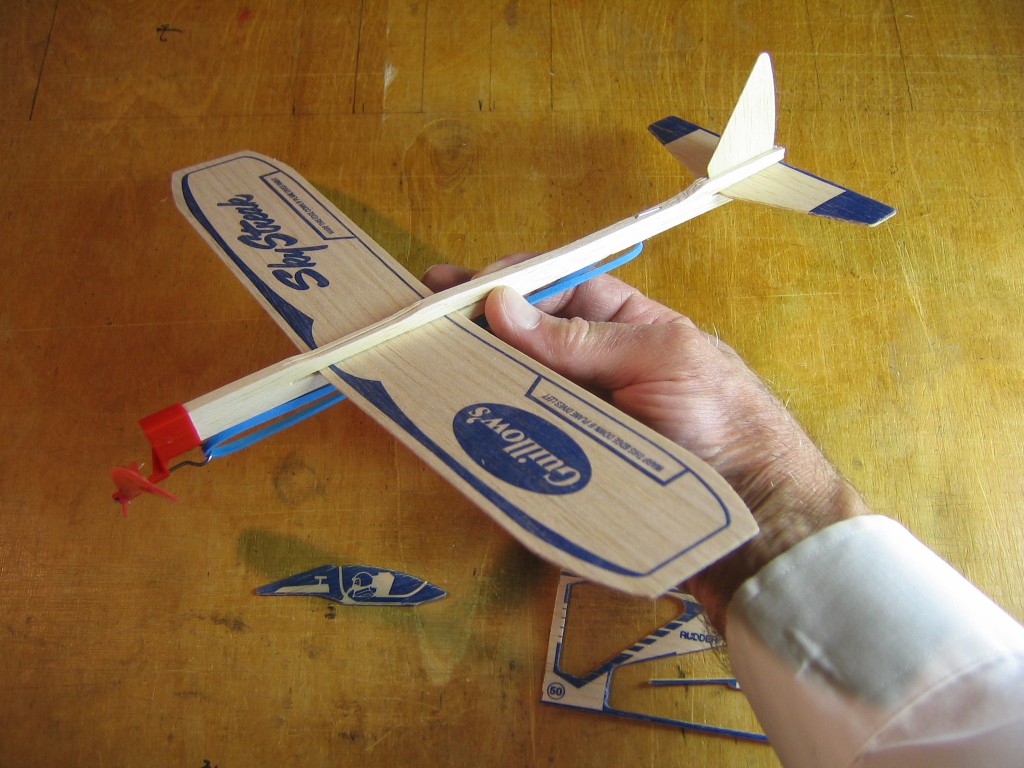
This article describes the construction of a rudder-only controlled model airplane that weighs 2.5 ounces. Total cost was about $35. For sure, I learned some interesting things along the way, all of which are shared here. The good news is that the electronic modifications are working well.Perhaps there’s something in here that you will find useful for YOUR own Micro-Sizer / BitChar-G airplane powered hack.
Ah, there is nothing quite like the thrill of hacking up an expensive digital camera and undoing what engineers spent countless hours fixing. I’m referring to the filter that cuts down the infrared wavelength light that strikes the image sensor. You see, if you don’t filter out the IR your images tend ot be washed out. Now this is fine if you just want to take the same old boring pictures that everyone else does. If you don’t, then this hack is for you. Once you have done this you can make some very cool looking photos by shooting through what to the naked eye looks to be a solid sheet of plastic. That plastic is a filter that only passes infrared light. Grass and leaves look white, dark clothing looks gray, the sky is black… The effect is stunning.
Now here is something you don’t see every day, a camera made out of a flatbed scanner. Even more cool than that is that it takes a 360 degree panoramic scan. This project write up had loads of photos and is sure to inspire more people to make cameras such as this.
Woooow! This is sooooo cool! Ok, I feel better now. I was scanning Neat-o-ramma tonight and saw this. This is the best DIY flight sim I have ever seen, even has multi axis movement simulation.
Australian amateur pilot and flight sim enthusiast Matthew Sheil spent 10 years and $230,000 to create a homemade flight simulator that precisely mimics the 747 cockpit down to the last dial, knob, and switch! Link | Matthew’s website (tons more photos, but I can only see ‘em in IE, not Firefox)
Now I can see why the British call them ‘torches’! A modded MagLite, some high power batteries and a projector bulb will get you one hell of a hot flashlight. WARNING! Do not use this to read books under the covers, that is unless you sleep on a stone slab and your sheets are made of asbestos. Extreme Geek - Fire starting flashlight
Share and Enjoy:These icons link to social bookmarking sites where readers can share and discover new web pages.