Ark III?

Man, does this look like the Ark from Ark II or what? Well, this won some design awards 

The concept of the GMC PAD is that of an urban loft with mobility. Featuring a diesel-electric hybrid system for propulsion, the engine also serves as a generator for the onboard power grid. The media rich environment is unlike any other, and comes with an endless variety of entertainment, information and security options.

[via Core 77

2006 Design Challenge : An LA Adventure

Robo-T Paper Robots

Paper robots from Japan 

This is a little collection of 25 very cool pop classic paper robots that you can make all the way from Japan!. Paper Forest has some navagation instructions in case you get lost:

Though in Japanese, the site is fairly intuitive to navigate. Just click on the robot you are interested in and then click on the link to the left of the enlarged model picture. Next you’ll click on the PDF icon and you’ll be ready to print

I love Paper Forest! 

[via Paper Forest]

Robo-T Paper Robots

(Translated via Google)

Homemade Air Engines


These little air powered motors remind me of a compressed CO2 airplane engine that my father had. It was a commercial product but the idea was the same. The high pressure gas would force the single piston down the cylinder and the inertia of the crankshaft would force the piston back up for another charge. It produced quite a bit of power from a single tiny cylinder of gas. The engines that Mike Smyth builds are a true work of art, all the parts were made from either brass from a local hardware shop or plastic form a cutting board. The tools were no more complex than a drill press and a belt sander. I’m quite happy to hear that he didn’t use a computer controlled mill or some strange stereo photo polymer lithography setup to build his wonderful machines.

[via MAKEzine blog

Air Engines

Random Pixel Lights

Super nice art hack here:

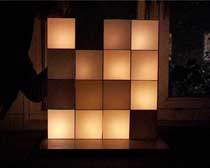
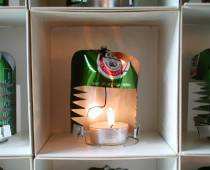
“Random Screen” is a mechanical thermodynamic display which does not rely on any electricity. Each of the 12 by 12 cm pixels is an individual entity. A tea candle lights and controls each pixel. The rising heat of the candle turns a modified beer can which turns the pixel on and off. Each pixel has its own frequency. The more bright a candle shines the faster is the rotation of the can. Each pixel is built as a separate module. Random Screen keeps growing.


Looks like it would be a fun project to work on for next Christmas. Put two tea lights in each cell one with a red gel and the other a green one and you might get some no-power pseudo random Christmas goodness.

[via we make money not art

Random Screen