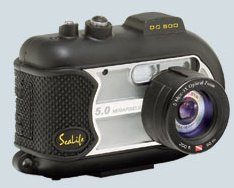
All the underwater cameras I have seen are either very expencive or they lack enough features to make them worth looking into. Like the lack of good underwater auto focus. Now I understand how tough that can be, water is thicker than air to light moves differently, there is generaly more stuff floating by the camera that might distract the AF system, the camera has a big housing around it to protect it… The hold and remember AF on the SeaLife DC500 looks like a handy feature, I use something like it on my Nikon D70 when I focus on a subject and then move the camera to compose the shot. I’d be willing to rent on of these on my next visit to the beaches of Thailand and see how it works.
The new SeaLife DC500 features a new "Shark Mode" for faster and sharper pictures of moving objects underwater and in sports photography on land. The Shark Mode is activated by simply pushing the camera’s OK button which focuses on the intended subject. The camera will now remember that focus range and take sharp pictures with virtually no shutter lag. Underwater, in diving or snorkeling, everything moves, the diver as well as sea creatures are in constant movement. In addition to the Shark Mode, the automatic Sea exposure mode will shorten the exposure time underwater for sharper pictures.
Some other features are:
- Good to 200’/60m
- 3x optical zoom
- 5 MP CCD sensor
- Uses an SD card for storage
- Takes MPEG4-VGA/30 frames per second AVI video if you want
- 2" LCD screen
- Supports external flash units (you need these to cut through the muck)
[via Red Ferret]