FSM Immortalized in the Annals of Science


Brilliant choice of subject!   

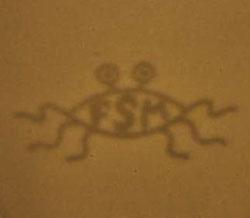
A dense bed of light-sensitive bacteria has been developed as a unique kind of photographic film. Although it takes 4 hours to take a picture and only works in red light, it also delivers extremely high resolution. The "living camera" uses light to switch on genes in a genetically modified bacterium that then cause an image-recording chemical to darken. The bacteria are tiny, allowing the sensor to deliver a resolution of 100 megapixels per square inch.

New Scientist Breaking News – Living camera uses bacteria to capture image

Hayabusa Touch and Go


Looks like the problem plagued space probe Hayabusa did make it’s scheduled landing on asteroid Itokawa after all. During a communications glitch, it kind of bumped into the target a few times. Kind of like a drunk saleryman navigating through a crowded train. The probe didn’t fire the pellet that was supposed to kick up dust and secure the one gram to be returned to Earth. If the probe checks out, they might give it another more controlled try in the next few days.

Hayabusa touched asteroid Itokawa after all

The Xtal Set Society

Xtal RadioAfter seeing this link to a clever crystal radio made out of a CD spindle over at Hack-a-day, I looked through some of my old bookmarks to find a few more ‘free radio’ links. The Xtal Set Society is like your one stop shop for parts and kits if your interested in learning about how to build crystal radios. If you didn’t know, a crystal radio is a radio that does not require any power source other than the AM broadcast signal itself to operate. Anyone that likes to tinker should build at least one of these, what’s cooler than something that works for free? Another great site for information is Crystal Radio Resources. I bet you didn’t know you could build a  crystal set to receive shortwave radio did ya?  Who knows, you might want to cheat a little and build a simple amp for your crystal set just to make it easier to hear over the noise of your computer.

Lost In Space


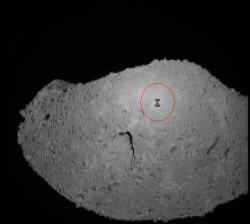
Oh bother, looks like a mistake during a down link hand off from one ground station to another resulted in the robotic lander Minerva to be dropped at the wrong time. Hayabusa (it’s shadow is visible on the above photo, cool eh?) had been making burns to keep station over the asteroid Itokawa when the lander was commanded to release. The spacecraft was moving away at a speed of 15cm/sec, 2cm/sec faster than the asteroids escape velocity. So, Hayabusa launched Minerva into space. That sucks, I was looking forward to seeing that hop around on the surface. However, all is not lost. The laser range finder system on Hayabusa is working great, the thrusters are working pretty well to keep correct orientation, and plans for the slug to be shot into Itokawa is still on the short list of planned events. 

Robot asteroid-explorer is lost in space

The Hydromechanical Cochlea


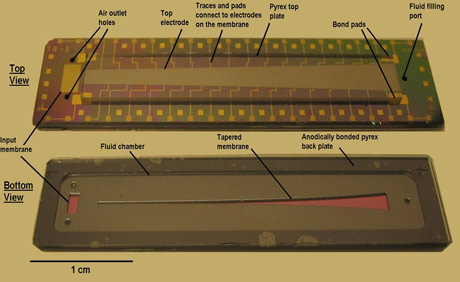
 This is getting close to an actual replacement for human hearing, it can detect sounds but it can’t do anything with the information. Also, the frequency range (4200-35,000 Hz) passes human hearing (20-20000 Hz). Still it is a major step closer to a hearing implant that could restore the hearing of thousands of people.

The Hydromechanical Cochlea