WorkPartner Robot From Finland

This is a pretty incredible looking robot. It’s got the ability to roll on wheels or lock their rotation and use them as a kind of big bouncy feet and walk around. It has a front mount for manipulator arms and a mast for sensors that is about the same height as a humans head. This lets the robot get a more human picture of the world, NASA/JPL did this on the current Mars rover mission. To me the whole thing looks like a centaur. Should be useful around a warehouse or a farm if it can pull a trailer.

[via Ohgizmo]
Workpartner Robot 

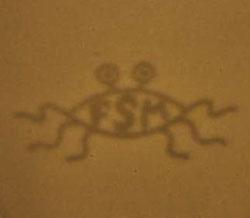
FSM Immortalized in the Annals of Science


Brilliant choice of subject!   

A dense bed of light-sensitive bacteria has been developed as a unique kind of photographic film. Although it takes 4 hours to take a picture and only works in red light, it also delivers extremely high resolution. The "living camera" uses light to switch on genes in a genetically modified bacterium that then cause an image-recording chemical to darken. The bacteria are tiny, allowing the sensor to deliver a resolution of 100 megapixels per square inch.

New Scientist Breaking News – Living camera uses bacteria to capture image

Hayabusa Touch and Go


Looks like the problem plagued space probe Hayabusa did make it’s scheduled landing on asteroid Itokawa after all. During a communications glitch, it kind of bumped into the target a few times. Kind of like a drunk saleryman navigating through a crowded train. The probe didn’t fire the pellet that was supposed to kick up dust and secure the one gram to be returned to Earth. If the probe checks out, they might give it another more controlled try in the next few days.

Hayabusa touched asteroid Itokawa after all

Nixie Clock Project

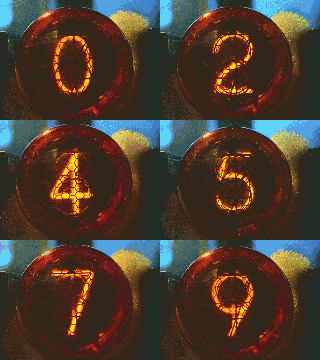
Nixie Tube 

Fire up the soldering irons and grab your Nixie tubes! Time to heat up the cathode and bask in that cheerful glow of warm electronics. Before you ask what the heck a Nixe tube is let me tell you. Long ago back when ‘solid state’ meant frozen, if you wanted to have an indicator lamp you used a neon bulb. You pass electricity through a glass tube that has neon in it and you get light. Very nifty. Even more nifty is that the light tended to cling to one of the electrodes and some brilliant guy thought to make useful shapes with them and thus the neon multi display was born.

Some of the voltages here are a bit high, so if your not sure about your 733t electronics skillz you might want to get some help with this. Once you have the hang of getting these old gems to light up you can interface them to things other than clock circuits and add a bit of warmth to your projects. After all, it’s not a real electronics project unless something glows.

Nixie Clock Project

The Xtal Set Society

Xtal RadioAfter seeing this link to a clever crystal radio made out of a CD spindle over at Hack-a-day, I looked through some of my old bookmarks to find a few more ‘free radio’ links. The Xtal Set Society is like your one stop shop for parts and kits if your interested in learning about how to build crystal radios. If you didn’t know, a crystal radio is a radio that does not require any power source other than the AM broadcast signal itself to operate. Anyone that likes to tinker should build at least one of these, what’s cooler than something that works for free? Another great site for information is Crystal Radio Resources. I bet you didn’t know you could build a  crystal set to receive shortwave radio did ya?  Who knows, you might want to cheat a little and build a simple amp for your crystal set just to make it easier to hear over the noise of your computer.