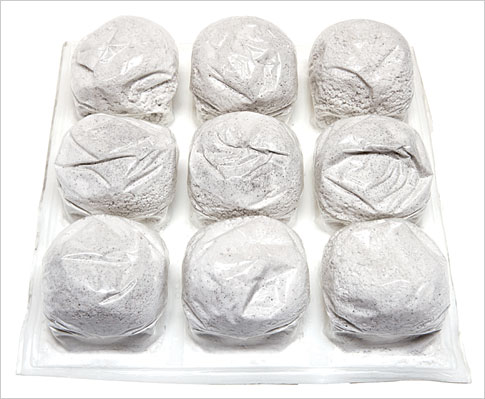
I saw this while looking around the Popular Science web page today. Its bubble wrap that is filled with a volcanic glass bead powder that will absorb the shock from an explosion in one thousandth of a second. Its being deployed in the trash cans located in the metro stations of Washington D.C.
Tag: Science
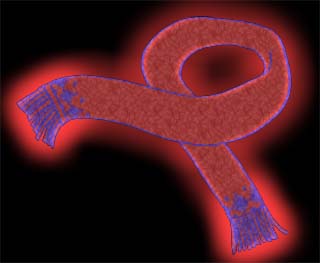
Chameleon Scarf
When my friend Greg sent me this link I’m sure he wasn’t thinking of the fashion applications of this new technology. The scarf uses a color sensor and a matrix of red, green, and blue LEDs to adopt the local color as it were. This reminds me of the active camouflage used by some ships and planes in WWII. The vehicle was illuminated by lights that were dimmed to match the ambient light levels. This would make the object harder to see at a distance. I suppose that the same would be true of a person wearing this if it was emulating the color of the wall behind the wearer. I doubt that it would be used in only this way, the fashion impaired would make a better market for this sort of thing.
The Cyberhand
Amazing advancements are being made in the area of prosthetic limbs. I have always thought that if I were to lose a hand or a foot I’d want to enlist the aid of some of my friends that build robots to help come up with a mechanical solution to my dilemma. From what I’ve read about body replacements such as these its hard to do better than the old fashioned spring loaded claw/hook. I think that a real solution will only come when battery technology reaches the kilowatt per gram range, or a motor that uses picowatts of power yet still delivers foot pounds of torque are available.
These guys are getting there though. As you can see by the quoted article below, they have movement down:
Funded by the Future and Emerging Technologies initiative of the IST programme, the CYBERHAND project aims to hard wire this hand into the nervous system, allowing sensory feedback from the hand to reach the brain, and instructions to come from the brain to control the hand, at least in part…So far, the project is racking up an impressive list of achievements. It has a complete, fully sensitised five-fingered hand. The CYBERHAND prototype has 16 Degrees of Freedom (DoFs) made possible by the work of six tiny motors. Each of the five fingers is articulated and has one motor dedicated to its joint flexing for autonomous control. It features that miracle of evolution, the opposable thumb, so the device can perform different grasping action
They also have a working solution to the feedback needed to accuratly use a prosthetic hand. This is in the form of Thin Film Longitudinal IntraFascicular Electrodes. Lets hope that testing begins soon for this device, I’m sure that there are more than enough people who would be willing to test this for them. Next they should work on a prosthetic foot. It would have to be cheap enough to be given out by aid orginizations around the world.
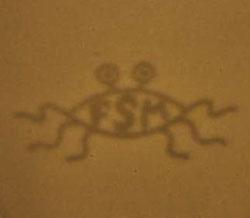
FSM Immortalized in the Annals of Science
Brilliant choice of subject!
A dense bed of light-sensitive bacteria has been developed as a unique kind of photographic film. Although it takes 4 hours to take a picture and only works in red light, it also delivers extremely high resolution. The "living camera" uses light to switch on genes in a genetically modified bacterium that then cause an image-recording chemical to darken. The bacteria are tiny, allowing the sensor to deliver a resolution of 100 megapixels per square inch.
New Scientist Breaking News – Living camera uses bacteria to capture image
Hayabusa Touch and Go
Looks like the problem plagued space probe Hayabusa did make it’s scheduled landing on asteroid Itokawa after all. During a communications glitch, it kind of bumped into the target a few times. Kind of like a drunk saleryman navigating through a crowded train. The probe didn’t fire the pellet that was supposed to kick up dust and secure the one gram to be returned to Earth. If the probe checks out, they might give it another more controlled try in the next few days.
The Xtal Set Society
After seeing this link to a clever crystal radio made out of a CD spindle over at Hack-a-day, I looked through some of my old bookmarks to find a few more ‘free radio’ links. The Xtal Set Society is like your one stop shop for parts and kits if your interested in learning about how to build crystal radios. If you didn’t know, a crystal radio is a radio that does not require any power source other than the AM broadcast signal itself to operate. Anyone that likes to tinker should build at least one of these, what’s cooler than something that works for free? Another great site for information is Crystal Radio Resources. I bet you didn’t know you could build a crystal set to receive shortwave radio did ya? Who knows, you might want to cheat a little and build a simple amp for your crystal set just to make it easier to hear over the noise of your computer.